
Letter of Intent in Canada: Is It Binding? Free Sample

A letter of intent (LOI) is the short document parties sign before the definitive agreement: buying a business, leasing commercial space, bringing in an investor or starting a joint venture. It records the main terms and the timeline for negotiating the rest. Whether it binds you depends less on its title than on how it is written.
Rules checked on November 10, 2026 against the cited Ontario Court of Appeal and Supreme Court of Canada decisions, the Civil Code of Quebec and federal and Quebec privacy statutes. This article is general information, not legal advice for your situation.
What is a letter of intent in business?
A letter of intent is a written document in which two parties confirm they want to complete a transaction and summarize its main terms: the subject, the price or range, the timeline and next steps. It prepares the final agreement without replacing it, unless it sets out every essential term and the parties meant to be bound on signing.
Also called a memorandum of understanding, it differs from the job or graduate school letter of intent that fills most Google results. This article covers only the business kind, used between companies, owners and investors.
Is a letter of intent legally binding in Canada?
It can be. Courts look at substance, not the label. If the parties agreed on every essential term and intended to be bound, a letter of intent can be an enforceable contract even though a formal agreement was to follow. If essential terms were left for later, only the clauses the letter expressly makes binding apply.
The leading Ontario case is Bawitko Investments Ltd. v. Kernels Popcorn Ltd., decided by the Court of Appeal for Ontario in 1991. The court said that when parties "agree on all of the essential provisions to be incorporated in a formal document with the intention that their agreement shall thereupon become binding, they will have fulfilled all the requisites for the formation of a contract." The fact that a formal document is to be signed later does not change that.
The same decision sets the limit. If no agreement on essential terms has been reached, or the terms are not agreed with reasonable certainty, the court concludes that they were to be agreed later "and until that time there would be no completed agreement." In Bawitko, a handshake and "you've got a deal" were not enough, because the long franchise agreement that would govern the relationship had not been settled.
Once a letter does create binding obligations, such as confidentiality or exclusivity, they must be performed honestly. In Bhasin v. Hrynew (2014 SCC 71), the Supreme Court of Canada recognized a common law duty of honest performance that applies to all contracts: parties "must not lie or otherwise knowingly mislead each other about matters directly linked to the performance of the contract." The court was clear that this is not a duty of loyalty or disclosure.
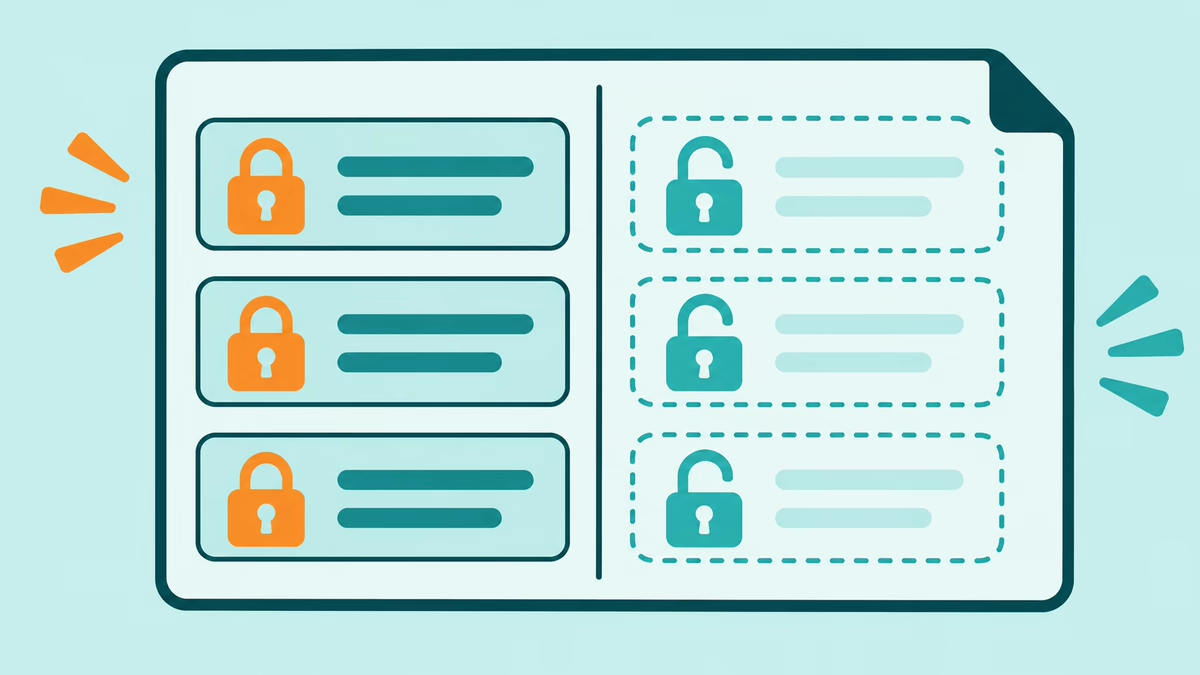
| Clause | Usually | Why |
|---|---|---|
| Description of the deal and price range | Non-binding | The final price depends on due diligence |
| Deal structure (shares or assets) and payment terms | Non-binding | They are settled in the definitive agreement |
| Conditions (financing, due diligence, consents) | Non-binding | They describe what must happen before signing |
| Confidentiality | Binding | Information shared must stay protected even if the deal fails |
| Exclusivity (no-shop) | Binding | It only works if the seller is actually bound not to negotiate elsewhere |
| Costs | Binding | It avoids a fight over fees if the deal falls through |
| Governing law, term and termination | Binding | They frame how the binding clauses apply |
This split is market practice, not a rule of law. The Business Development Bank of Canada describes the same logic: a letter of intent is not intended to be fully binding unless expressly stipulated, but it creates binding obligations where it says so, particularly for confidentiality and exclusivity (BDC).
How does a letter of intent work in Quebec?
Quebec applies the Civil Code instead of the common law, and its rules can make a letter of intent binding sooner than expected. Under article 1388, a proposal that contains all the essential elements of the contract and shows a willingness to be bound is an offer. Once accepted, it forms the contract, even if secondary details remain open.
Article 1387 of the Civil Code of Quebec says the contract is formed when acceptance is received "even though the parties have agreed to reserve agreement as to certain secondary elements." A line such as "details to be finalized" does not, on its own, prevent a contract from forming. Under article 1396, a promise to contract is not the contract itself, but once the beneficiary accepts it, both sides are bound to enter into the contract.
Quebec also imposes good faith from the start. Article 1375 requires the parties to act in good faith "both at the time the obligation arises and at the time it is performed or extinguished," and articles 6 and 7 bar exercising rights to injure another or in an excessive and unreasonable manner. A party that negotiates with no real intention to close, or walks away abruptly after the other side has incurred costs, can be liable for the harm its fault causes (art. 1457).
A Quebec court also looks for the parties' common intention rather than the literal words (art. 1425), so "undertakes" versus "contemplates" matters, as does a clause excluding any obligation to close.
What is the purpose of a letter of intent?
A letter of intent tests whether the parties agree on the essentials before either one spends heavily on the deal. It sets the timeline, gives the buyer access to the information it needs and protects both sides during negotiations through confidentiality and exclusivity clauses. It also gives lenders and boards a clear summary to review.
| Situation | What the letter covers | Final agreement |
|---|---|---|
| Buying a business | Shares or assets, price range, due diligence, exclusivity | Share or asset purchase agreement |
| Commercial lease | Premises, term, base rent, landlord work, possession date | Commercial lease |
| New investor | Amount, percentage, share class, investor rights | Subscription agreement and shareholders' agreement |
| Partnership or joint venture | Contributions, revenue split, governance, term | Partnership or joint venture agreement |
| Supply deal | Volumes, unit prices, term, territorial exclusivity | Supply agreement |
For an investment, the term sheet plays this role. The investor's rights will end up in a shareholders' agreement, so do not promise rights in the term sheet that the founders are not ready to grant.
What should a letter of intent to buy a business include?
A letter of intent to buy a business names the parties, says whether shares or assets are being bought, gives a price or price range with payment terms, lists the conditions, sets the due diligence and exclusivity periods, and states which clauses are binding. It should also end on a fixed date if no agreement is signed.
- Parties. The exact legal name of each person or corporation. If the buyer will use a corporation not yet incorporated, say so.
- What is being bought. The shares of the company, or its assets: equipment, inventory, customer lists, brand. The choice has major tax and legal consequences, so get your accountant's view before writing it down.
- Price. A figure or a range, how it will be adjusted (working capital, debt) and how it will be paid: cash at closing, a vendor take-back loan, or an earn-out tied to future results.
- Conditions. Financing, satisfactory due diligence, consent from the landlord or key customers, key employees staying on.
- Due diligence. What the buyer can review (books, contracts, permits, litigation) and for how long.
- Exclusivity. The period during which the seller agrees not to solicit or accept other offers, and, if the parties want one, a remedy for breach such as reimbursing the buyer's costs.
- Right to withdraw. The buyer's right to walk away at any time if the deal does not offer the expected benefits, a clause BDC suggests including.
- Confidentiality. A clause in the letter, or a reference to a confidentiality agreement already signed.
- Conduct until closing. The seller keeps running the business in the ordinary course, without selling major assets or changing salaries.
- Costs, governing law and term. Each party pays its own costs, the province whose law applies, and a date on which the letter ends.
- Binding effect. One sentence that lists the binding clauses and says the others create no obligation to complete the deal.
| Term | Common mistake | Safer wording |
|---|---|---|
| Price | A firm number with no condition | "Proposed price between $X and $Y, subject to due diligence" |
| Exclusivity | No end date | "Until [date] or the signing of the definitive agreement, whichever comes first" |
| Binding effect | Silent on what binds | "Only sections X, Y and Z are binding on the parties" |
| Financing | "Subject to financing" with no detail | Amount, type of financing and a deadline to obtain it |
| Signature | Signed by someone without authority | Signed by an authorized officer, with title |
What happens after you sign a letter of intent?
After signing, the buyer runs its due diligence during the exclusivity period. The lawyers then draft the definitive agreement, which carries over the terms of the letter and adjusts them for what due diligence found. The deal closes when the price is paid and ownership changes hands.
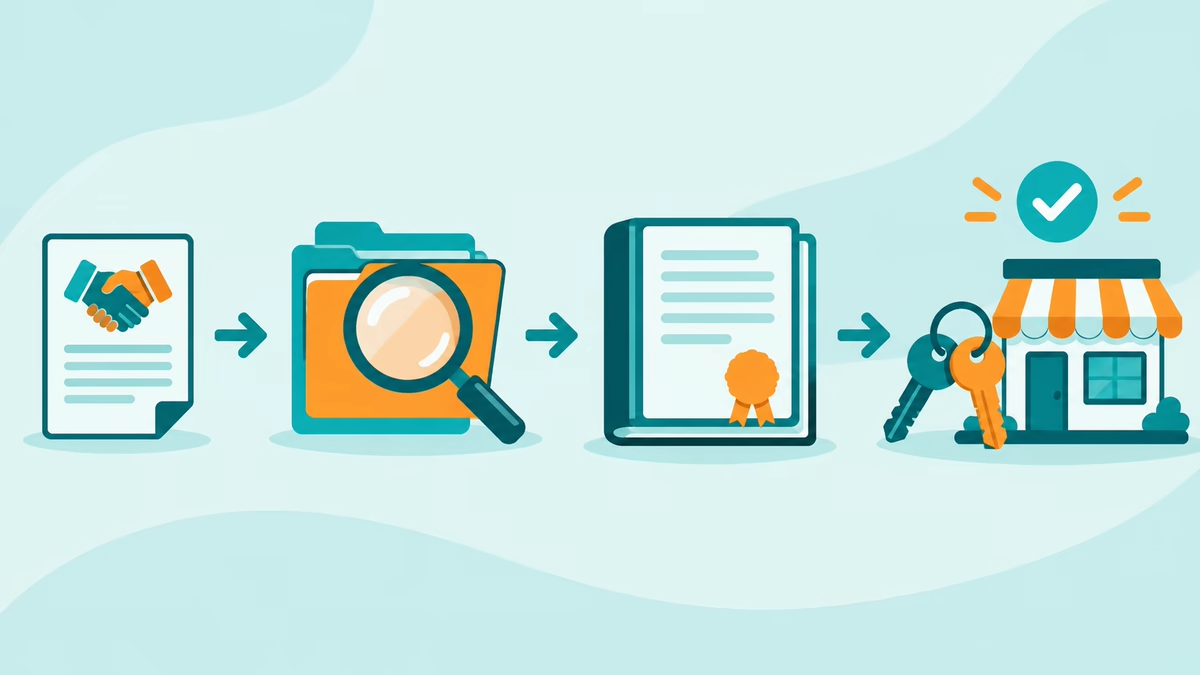
Put dates in the letter, not vague timeframes. If due diligence uncovers a lawsuit, a tax debt or a key contract that cannot be assigned, the letter should let the buyer renegotiate or walk away without penalty.
Can you share personal information during due diligence?
Yes, under conditions. Federal privacy law allows parties to a prospective business transaction to use and disclose personal information without consent if the information is necessary and the parties first sign an agreement that limits its use. Quebec, which has its own private sector privacy law, sets a similar rule.
Before closing, section 7.2 of the Personal Information Protection and Electronic Documents Act requires an agreement obliging the recipient to use the information solely for purposes related to the transaction, protect it with appropriate safeguards and, if the deal does not proceed, return or destroy it within a reasonable time. The information must be necessary to decide whether to proceed and to complete the deal. After closing, they may keep using it only under an agreement that meets section 7.2(2): use limited to the original purposes, safeguards, and respect for any withdrawal of consent. The information must be needed to run the acquired business, and the individuals must be notified within a reasonable time. The exception does not cover a deal whose primary purpose or result is acquiring, disposing of or leasing personal information.
In Quebec, section 18.4 of the Act respecting the protection of personal information in the private sector follows the same pattern. The prior agreement must also require the buyer to destroy the information once it is no longer needed to conclude the deal, and after closing the buyer must tell the people concerned that it now holds their information. Alberta and British Columbia have their own private sector laws for activity inside those provinces, according to the Office of the Privacy Commissioner of Canada. In practice, these terms go into the non-disclosure agreement signed before the letter of intent, or into the confidentiality clause of the letter itself.
What is the difference between a letter of intent and an offer to purchase?
A letter of intent opens a negotiation and usually binds only on a few clauses. An offer to purchase contains every essential term and the intention to be bound: once accepted, it creates a contract. The definitive agreement is the complete contract that settles every detail before closing.
| Document | Legal effect | When to use it |
|---|---|---|
| Letter of intent | Usually no obligation to complete the deal, except clauses stated to be binding; can be a contract if its wording and the parties' intent make it one | Early, before due diligence |
| Offer to purchase | Once accepted, a binding contract | When price and conditions are settled |
| Definitive agreement | Complete, enforceable contract | At the end of negotiations, before closing |
In Quebec, an offer with a deadline cannot be revoked before the deadline expires, while an offer without one can be revoked until acceptance is received (art. 1390). Silence is not acceptance unless the parties' intent, the law or special circumstances such as a prior business relationship say otherwise (art. 1394). A letter of intent that reads like an offer can therefore become irrevocable for the period it sets.

How do you write a letter of intent?
Keep it short, dated and signed by people with authority. Identify the parties and the deal, list the main terms and conditions, set the exclusivity period and an end date, and state clearly which sections are binding. Here is a sample letter of intent for buying the shares of a business. Replace the items in square brackets.
[City], [date]
[Buyer's name or corporation]
[Address]
To: [Seller's name], shareholder of [Target company name]
Re: Letter of intent, purchase of the shares of [Target company name]
Dear [Name],
1. Proposed transaction. The buyer proposes to purchase all of the issued shares of [target company] on the terms summarized below, subject to the signing of a definitive share purchase agreement.
2. Proposed price. Between $[amount] and $[amount], payable [in cash at closing / partly by a vendor take-back loan over [term]], subject to the results of due diligence.
3. Conditions. The transaction is conditional on the buyer obtaining financing of $[amount] by [date], satisfactory due diligence and [other conditions].
4. Due diligence. Subject to applicable privacy law and the confidentiality agreement, the seller will give the buyer and its advisers access to the company's books, contracts, permits and records until [date].
5. Exclusivity. Until [date], the seller will not solicit, encourage or accept any other offer for the company or its material assets. Exclusivity ends earlier if the buyer gives written notice that it is withdrawing, which it may do at any time.
6. Confidentiality. The parties remain bound by the confidentiality agreement signed on [date], which applies to all information exchanged.
7. Costs. Each party pays its own costs, whether or not the transaction closes.
8. Binding effect. Only sections 4 to 9 of this letter are binding on the parties. The other sections describe the parties' current intention and create no obligation to complete the transaction.
9. Term and governing law. This letter ends on [date] if no definitive agreement has been signed, but sections 6 and 7 survive that date. It is governed by the laws of [province] and the federal laws of Canada that apply there.
[Signature, name and title of the buyer's authorized representative]
Read and accepted on [date]: [Signature, name and title of the seller]
This sample suits a simple two-party deal. With several sellers, complex financing or key employees to retain, have it adapted. Writing "agrees to sell" where you meant "proposes to sell" can make the letter enforceable as a contract.
Frequently asked questions about letters of intent
Is a letter of intent signed by email valid?
It can be. Nothing in the Bawitko test depends on paper: what counts is agreement on essential terms and an intention to be bound. In Quebec, article 1387 adds that a contract is formed when acceptance is received, whatever the method used. Keep a dated copy of every version exchanged and of the acceptance.
Can you back out of a letter of intent?
Usually yes, if the letter creates no obligation to complete the deal. The binding clauses still apply: you must keep information confidential and, as a seller, respect exclusivity until it ends. In Quebec, walking away in bad faith after the other side has incurred costs can lead to damages.
Who writes the letter of intent, the buyer or the seller?
Usually the buyer, because it is the one proposing the deal. In Quebec, the Civil Code ties an offer to the person who initiates the contract or determines its content (art. 1389). A seller who does not like the terms should answer with a written counter-proposal rather than sign the buyer's draft.
How long should exclusivity last?
There is no standard length; it is negotiated deal by deal. The period should cover due diligence and drafting the definitive agreement without tying up the seller indefinitely. Write a precise end date, and provide that exclusivity ends earlier if the buyer says it will not proceed. An exclusivity clause with no end date invites a dispute.
Does a letter of intent replace a non-disclosure agreement?
Not always. A letter can include a confidentiality clause, but the buyer often needs information before it can propose a price, so the NDA is signed first and the letter refers to it. To share personal information without consent, the NDA must meet the applicable privacy law, such as PIPEDA section 7.2 or Quebec's section 18.4.
Do you need a lawyer for a letter of intent?
Not for a simple letter. It is wise as soon as the letter sets a price, exclusivity or penalties, or when several parties are involved. A review lowers the risk of a dispute over whether a contract was formed, the kind of dispute that often starts with a cease and desist letter.
Get your letter of intent reviewed before you sign
A well-drafted letter of intent confirms agreement on the essentials, protects your information and leaves you a way out if due diligence turns up a bad surprise. A poorly drafted one can lock you into a price or a deal too early. Barricad Avocats, the law firm behind Lexstart, can draft or review it under a separate mandate. Book an appointment.

Stay informed
Get our latest resources and guides for entrepreneurs delivered straight to your inbox
Ready to start your business?
Start your entrepreneurial journey with professional legal support.