
What Is a Non-Disclosure Agreement (NDA) in Canada?

A non-disclosure agreement is one of the shortest contracts a business will ever sign and one of the easiest to get wrong. Most templates protect far less than the person signing them assumes.
This guide covers what an NDA actually is, which type applies to your situation, the eight clauses that decide whether it holds, and what an NDA cannot do no matter how it is drafted.
General information, not legal advice. Confidentiality obligations depend on the wording, the province and the circumstances.
What is a non-disclosure agreement?
A non-disclosure agreement, or NDA, is a contract in which one or more parties agree to keep specified information confidential and to use it only for an agreed purpose. It is also called a confidentiality agreement. In Canada it is a private contract, enforced through the courts, and it binds only the people who sign it.
The name matters less than the wording. "NDA", "confidentiality agreement" and "confidentiality clause" describe the same mechanism at different levels of packaging. What separates a useful one from a decorative one is how precisely it defines the information, the purpose and the duration.
| Instrument | What it does | Typical use |
|---|---|---|
| Non-disclosure agreement | Standalone contract limiting use and disclosure of defined information | Before sharing anything with an outside party |
| Confidentiality clause | Same obligation, written inside a larger contract | Employment, service and supply agreements |
| Non-compete clause | Restricts working for or starting a competitor | Employment and share-purchase agreements |
| Intellectual property assignment | Transfers ownership of what someone creates | Contractors, employees, founders |
| Trade secret protection | Statutory and common-law protection for information kept secret | Formulas, methods, customer lists |
Unilateral or mutual, which one applies to you?
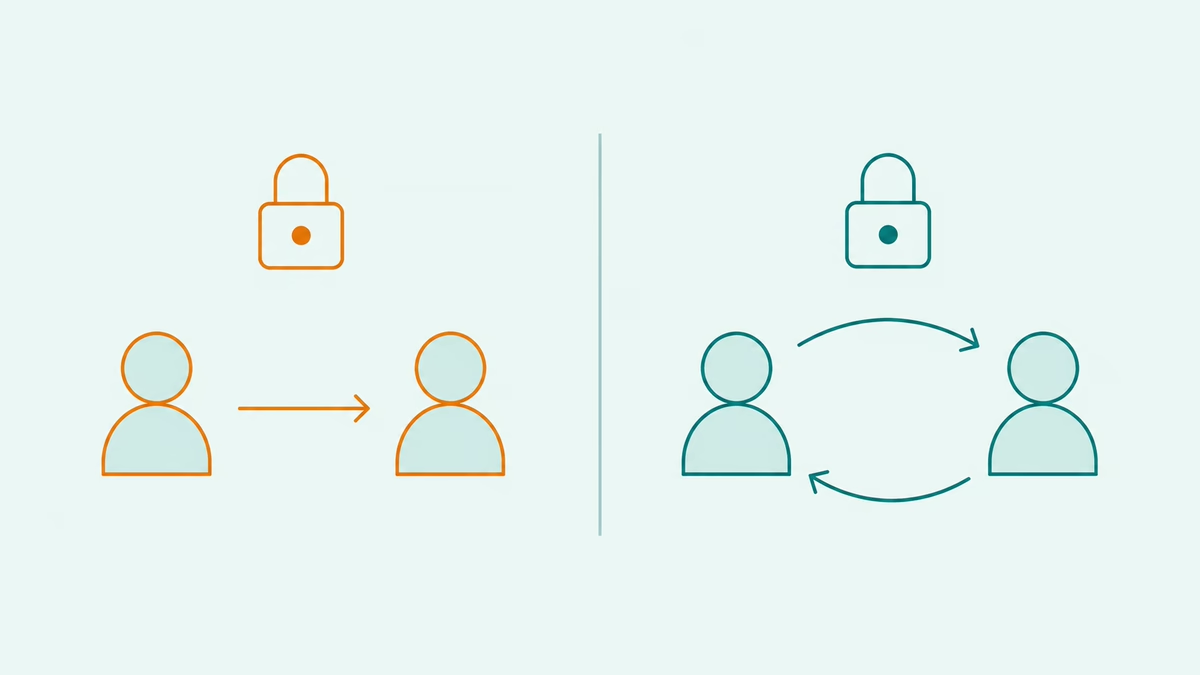
A unilateral NDA protects one side, the party doing the disclosing. A mutual NDA protects both, because both expect to share something sensitive. Choose based on the direction of the information, not on who drafted the document.
A unilateral NDA also tends to be shorter, which matters more than it sounds. Short agreements get read. Long ones get signed unread, and an obligation nobody read is an obligation nobody follows until a lawyer points at it two years later.
Most founders reach for a mutual NDA out of politeness when a unilateral one is more honest. If only you are opening your books, a mutual agreement gives the other side obligations they will never trigger and gives you a document that is harder to enforce because it is vaguer on both ends.
When does a Canadian business actually need one?
Before information leaves your control, not after. The practical test is simple: if the other party could use what you are about to say to compete with you, replicate you or resell you, the conversation needs a written boundary first.
| Situation | Who signs | Usual type |
|---|---|---|
| Hiring an employee with access to client data | Employee | Confidentiality clause in the contract |
| Engaging a freelancer or agency | Contractor | Unilateral NDA plus IP assignment |
| Early talks with an investor | Investor | Often none, since most funds refuse |
| Evaluating a supplier or manufacturer | Supplier | Unilateral or mutual |
| Discussing a merger or acquisition | Both parties | Mutual |
| Sharing a product roadmap with a partner | Both parties | Mutual |
Investors are the exception worth naming. Most institutional funds decline to sign an NDA before a first meeting, because they see hundreds of adjacent companies. That is not a red flag. Adjust what you disclose instead of insisting on the signature.
What information can an NDA protect?
Anything you can define and actually keep confidential. That second half is where most agreements fail. Information already public, already known to the other party, or independently developed by them sits outside the agreement no matter what the document says.
A workable definition names categories: pricing models, customer lists, source code, unreleased designs, financial statements, supplier terms. A catch-all such as "all information disclosed" is easier to draft and harder to enforce, because a court asked to police it has no way to tell what was actually confidential.
Personal information carries its own rules on top of the contract. If what you are sharing includes client or employee data, provincial and federal privacy law applies independently, and our guide on the protection of personal information in Quebec covers what that adds.
Which clauses decide whether an NDA holds up?
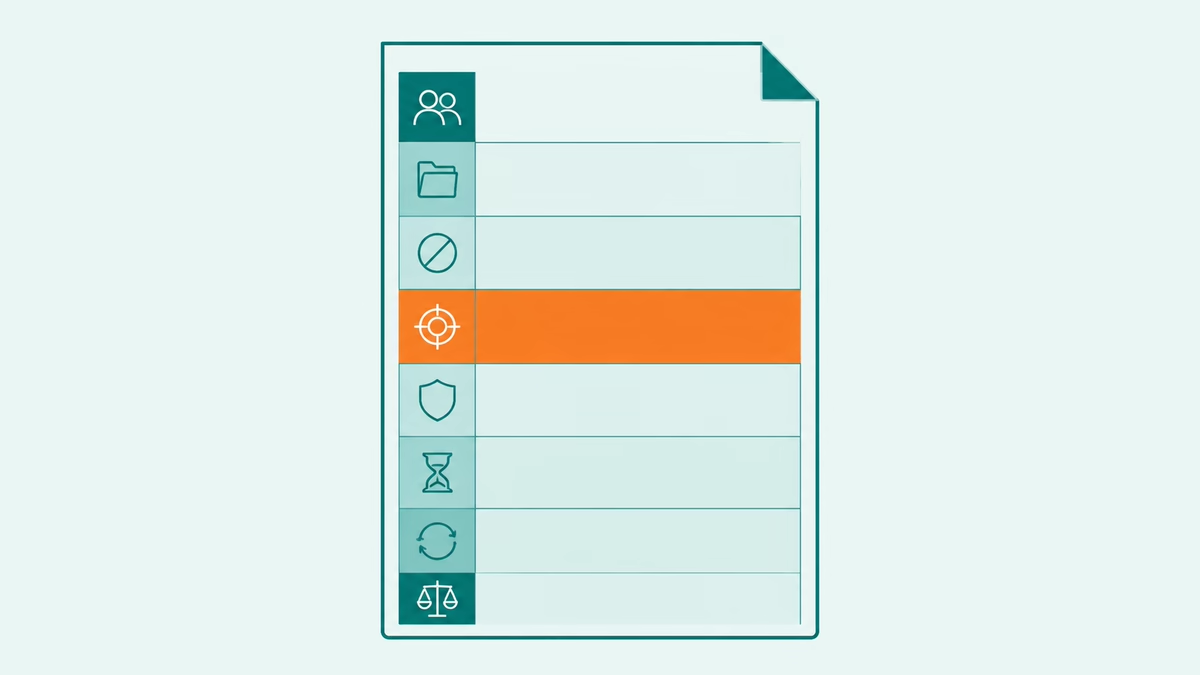
Eight of them, and they are almost always the ones a free template treats as boilerplate. Read these before you sign anything.
| # | Clause | What to check |
|---|---|---|
| 1 | Parties and permitted recipients | Whether employees, advisors and affiliates are covered |
| 2 | Definition of confidential information | Specific categories beat a catch-all sentence |
| 3 | Exclusions | Public, already known, independently developed, legally compelled |
| 4 | Permitted purpose | One named purpose, not "business purposes" |
| 5 | Protection measures | Storage, access limits, subcontractor obligations |
| 6 | Duration | A fixed term, plus longer or perpetual for trade secrets |
| 7 | Return or destruction | Deadline, format, written confirmation |
| 8 | Governing law and remedies | Province, forum, and whether injunctive relief is available |
Clause 4 is the one most people skim. A permitted purpose written as "for business purposes" lets the recipient use your information for almost anything and still argue compliance. Name the transaction.
What an NDA does not do
It does not stop disclosure. It creates a claim after disclosure happens, which is a different thing. Once information is public, no clause pulls it back.
It also does not protect an idea in the abstract, does not transfer ownership of anything, and does not prevent someone from competing with you. Ownership needs an IP assignment. Competition needs a separate restrictive covenant, and in Quebec those face real limits, which we cover in our article on the non-compete clause. Information you intend to keep secret indefinitely may be better handled as a trade secret, and the Canadian Intellectual Property Office explains what that protection requires.
What should you do if confidential information leaks?
Move quickly and document everything. Write down what was disclosed, when, to whom and how you learned about it, then preserve the evidence before anyone deletes a thread.
Then check what the agreement actually promised you. Some NDAs give you a right to injunctive relief without proving monetary damage, and some are silent, which changes what a court will grant and how fast.
Send written notice to the other party referring to the specific clause. Ask for return or destruction and a written confirmation. Then assess the real damage before escalating, because an injunction is expensive and courts want to see concrete harm rather than the possibility of it. Speak to a lawyer before sending anything that threatens litigation.
Frequently asked questions
Is an NDA legally binding in Canada?
Yes, when it meets ordinary contract requirements: identified parties, clear obligations, consideration and consent. Canadian courts enforce confidentiality agreements regularly. They will read an overly broad or indefinite obligation narrowly, so a precise agreement is easier to enforce than a sweeping one.
What does NDA stand for?
NDA stands for non-disclosure agreement. It is the same instrument commonly called a confidentiality agreement, and the two terms are used interchangeably in Canadian practice. The label on the document has no legal effect. What binds the parties is the wording of the obligations inside it.
How long should an NDA last?
Commonly two to five years for commercial information, matched to how long the information stays valuable. Trade secrets often warrant a longer or perpetual obligation. An indefinite term on ordinary business information invites a court to narrow it, so tie the duration to the category of information.
Is an NDA the same as a non-compete?
No. An NDA controls what someone may say or use. A non-compete controls where and for whom they may work. They solve different problems and courts treat them differently, with non-competes facing far heavier scrutiny in Quebec. One document can contain both, but each needs its own drafting.
Does an NDA protect an idea?
Only partly. An NDA covers the disclosure of an idea to a specific party under agreed terms. It gives you no ownership and no protection against someone who develops the same idea independently. For durable protection you need patent, copyright, trademark or trade secret treatment.
Before you share anything sensitive
Lexstart provides Canadian legal templates and review, so your NDA matches the situation rather than a generic form. Not sure whether you need a standalone NDA or a clause inside an existing contract? Get in touch and we will point you at the right one.

Stay informed
Get our latest resources and guides for entrepreneurs delivered straight to your inbox
Ready to start your business?
Start your entrepreneurial journey with professional legal support.