
Business Bank Account for Sole Proprietors in Canada: Do You Need One?

Sole proprietors in Canada often start by running client payments through their everyday chequing account. That works until a customer writes a cheque to your business name, a payment processor asks for business banking details, or tax season turns into a sorting exercise. This guide covers when a separate account is required, what banks ask for, and what it does not change.
This article is general information, not legal, tax or accounting advice for your situation.
Do you need a business bank account as a sole proprietor?
No federal or provincial law requires every sole proprietor to open a business bank account. The Canada Revenue Agency does say that a business with a name other than your own needs a separate bank account to process cheques payable to that business. If you operate under your own legal name, a separate account is optional but strongly recommended.
A sole proprietorship is not a separate legal person. You and the business are the same taxpayer, the same debtor and the same account holder. That is why a "sole proprietor business account" is usually opened in your personal name, sometimes with a registered trade name attached, rather than in the name of an independent entity.
The CRA's sole proprietorship page sets out the practical rule. Operate under your own name and you bill clients in your own name. Operate under a registered business name and you bill in that name, which means cheques will arrive made out to a name your personal account does not recognize.
| Your situation | Separate account required? | What to keep in mind |
|---|---|---|
| You work under your own legal name with a handful of clients | No | A second personal account used only for the business already makes bookkeeping easier |
| You work under your own name with regular sales and expenses | No, but recommended | Separation makes it easier to support income and expense claims |
| You use a trade name such as "Maple Snow Removal" | In practice, yes | Cheques payable to that name need an account that carries it |
| You take card payments through a processor or terminal | Depends on the provider | Check which type of deposit account the processor accepts |
When does a separate account become necessary?
A separate account becomes necessary in practice when money arrives in a name that is not yours. That happens as soon as you register a trade name and customers pay the business rather than you personally. It also becomes the sensible choice once transaction volume makes a shared personal account hard to reconcile.
Registration rules decide when a trade name is official. In Ontario, the province's guide to choosing an ownership structure says you must register a sole proprietorship if you are not using your own name as the business name. In Quebec, a sole proprietor using a name that does not include their first and last name must register with the Registraire des entreprises within 60 days of starting operations.
Other provinces have their own business name registration systems. The pattern is the same everywhere: once your business name differs from your legal name, the bank will want proof that the name belongs to you before it lets you deposit money under it.
Which account type fits a sole proprietor?
Most sole proprietors choose between a second personal chequing account used only for the business and a true business chequing account. The personal option is usually cheaper but typically cannot accept cheques payable to a trade name. A business account recognizes the trade name and unlocks merchant services, bulk deposits and accounting integrations.
The right choice depends on your volume and the name you use. A freelance designer billing four clients a month under their own name has different needs from a contractor who receives cheques in the company's trade name and pays suppliers every week.
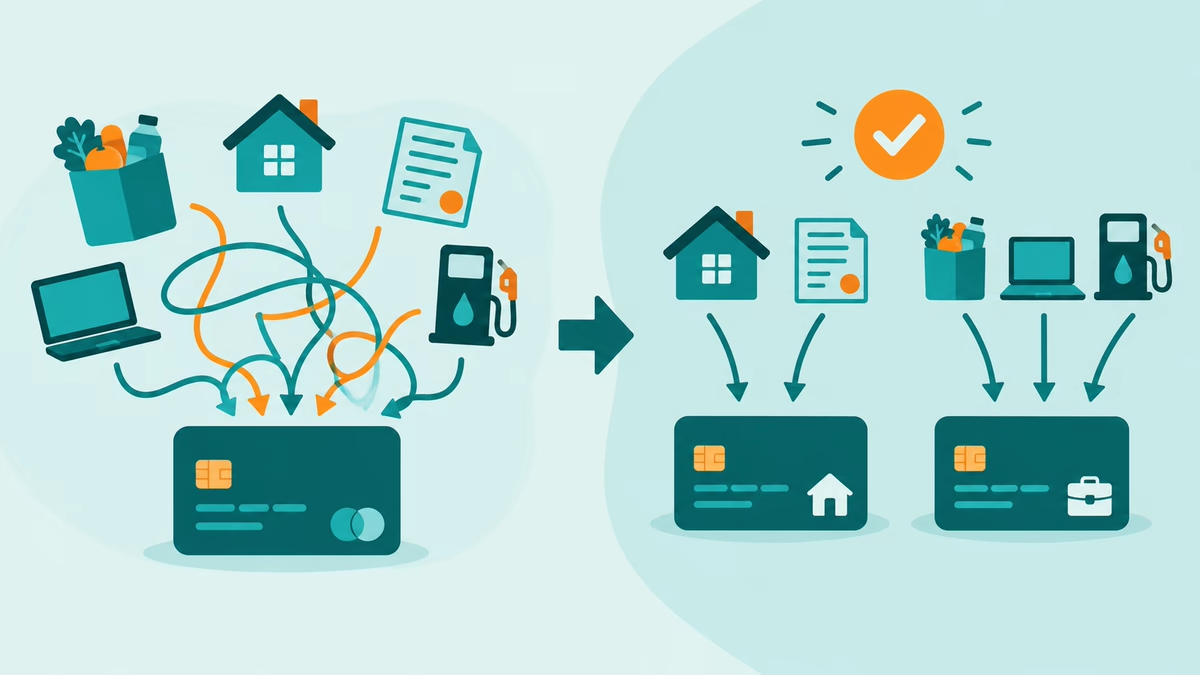
If you keep a personal account for business activity, read the account agreement. It tells you whether the institution accepts commercial use and what fees apply to transactions beyond the monthly limit.
| Feature | Dedicated personal account | Sole proprietor business account |
|---|---|---|
| Account holder | You, as an individual | You, as owner, often with the registered trade name |
| Cheques payable to a trade name | Usually refused | Accepted once the name is registered |
| Monthly fees | Often lower | Vary with the plan and transaction count |
| Business services | Limited | Bulk deposits, payment terminals, accounting software feeds |
| Best fit | Small activity under your own name | Trade name, steady volume or need for business tools |
What do you need to open a sole proprietor business bank account?
For a sole proprietorship, banks mostly verify you personally: your name, address, date of birth and government-issued photo ID. If you use a trade name, they also ask for proof of its registration, such as an Ontario business name registration or Master Business Licence, or a Quebec registration statement showing your Quebec enterprise number.
BMO's account opening page lists exactly that for sole proprietors: personal details with identification, plus a trade name registration or Master Business Licence if you use a registered trade name. Scotiabank's guide makes the same distinction: unless you run a sole proprietorship under your own name, you will need documents showing the business name.
| Document | When banks ask for it | Where it comes from |
|---|---|---|
| Government-issued photo ID | Always | Driver's licence, passport or another ID the bank accepts |
| Address and date of birth | Always | Your personal records |
| Ontario business name registration or Master Business Licence | Ontario trade name | Ontario Business Registry |
| Quebec registration statement and NEQ | Quebec trade name | Registraire des entreprises du Québec |
| CRA business number | If you already have one, for example for GST/HST | Canada Revenue Agency |
Expect questions about what the business does, how much money will move through the account and where it comes from. Banks ask these to set up the account and meet their client identification obligations. Having clear answers speeds up online applications.
Do you have to register your business name before opening the account?
Only if you plan to operate under a name other than your own. In that case, register the name first, because the bank needs the registration to link the trade name to you. Under your own first and last name, most provinces do not require a name registration and you can open the account with personal ID alone.
Fees are modest. Ontario's registration fee schedule lists about $60 to register a sole proprietorship business name online, and about $60 to renew it.
Government fees shown were checked on September 22, 2026. They change periodically, so confirm the current amount before paying.
In Quebec, the Registraire des entreprises fee schedule (in French) lists about $41 for an individual's registration declaration and about $41 for each annual updating declaration filed on time. Quebec also requires registration within 30 days for a tobacco retail outlet or artificial tanning salon, even under your own name. Our guide on how to register a business in Quebec online walks through that filing.
| Province | When registration is needed | Approximate government fee |
|---|---|---|
| Ontario | Business name other than your own name | About $60 online, renewal about $60 |
| Quebec | Name without your first and last name, within 60 days of starting | About $41, plus about $41 per annual update |
| Other provinces | Usually when you use a trade name | Set by each provincial registry |
How do you choose the best bank for a sole proprietorship?
There is no single best bank for every sole proprietor. The right account is the one whose fees match your real usage: transactions per month, cheque deposits, Interac e-Transfers, card payments and branch access. Compare a typical month of activity at each institution rather than the advertised monthly fee alone.
All the major banks and credit unions offer small business plans, and several let sole proprietors apply online. A no-monthly-fee plan can end up costing more if every transaction beyond a small allowance is charged. A higher monthly fee can pay for itself if you deposit many cheques or need a branch nearby.
Ask these questions before you sign:
- How many transactions are included each month, and what does each extra one cost?
- Will the account accept cheques payable to your trade name?
- Can you receive Interac e-Transfers under the business name?
- Does the account feed directly into your accounting software?
- Will a business credit card or line of credit be available later, and on what terms?
Are sole proprietor deposits insured separately?
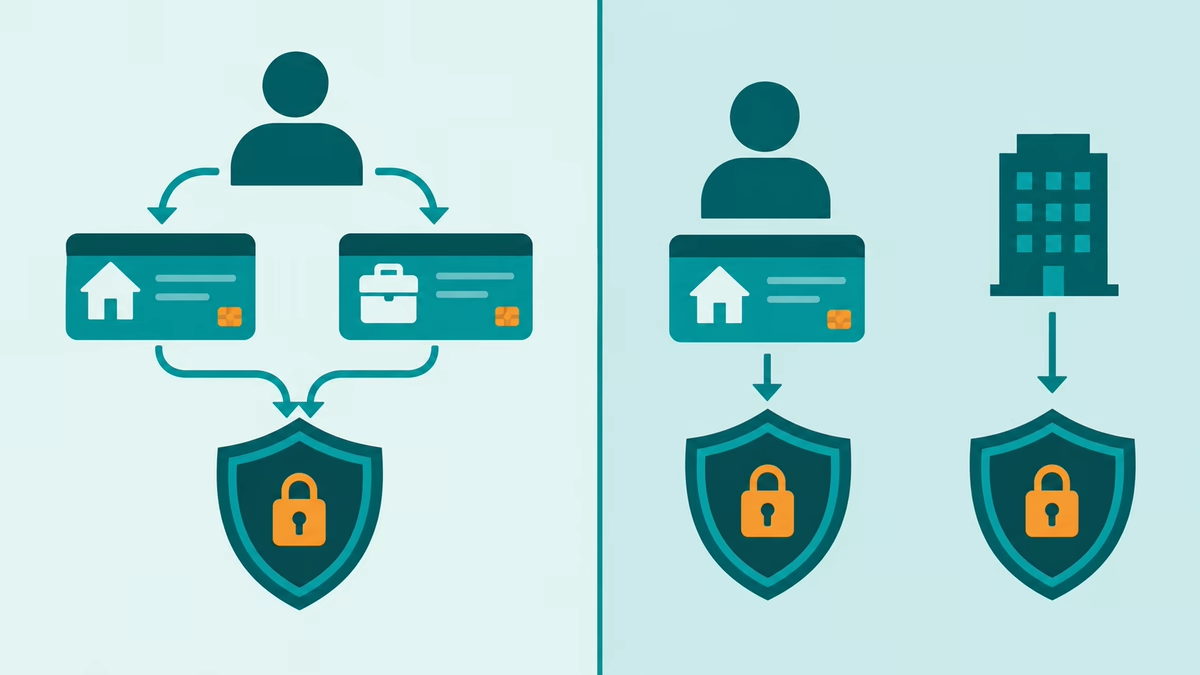
No. Because a sole proprietorship is not a separate legal entity, its deposits are combined with your personal deposits when deposit insurance is calculated. The Canada Deposit Insurance Corporation covers up to $100,000 per deposit category at each member institution, so opening a business account in your name does not add a second layer of coverage.
CDIC's page for depositors is explicit: sole proprietorships do not benefit from separate deposit protection, and deposits in the individual's name are combined with the sole proprietor's deposits. In Quebec, deposits at Desjardins caisses fall under the Autorité des marchés financiers, which also caps protection at $100,000 per category and per institution and groups your deposits with those of a sole proprietorship you own.
This matters when balances grow, for example if you hold collected sales tax or money set aside for your income tax instalments. Spreading funds across institutions reduces that risk. A corporation, by contrast, is a separate depositor.
Does a separate account change how you're taxed?
No. Your bank account does not change how a sole proprietorship is taxed. You report business income or loss on your personal T1 return, using Form T2125 for business or professional activities, and the profit is taxed at your personal rates. A separate account simply makes that reporting faster and easier to support.
When every sale and expense runs through one account, you can reconcile statements, find receipts and show that an expense relates to the business. Mixing groceries, rent and business purchases forces you to sort each transaction at year-end.
Sales tax works the same way. You remain a small supplier as long as your taxable supplies do not exceed $30,000 in a calendar quarter or over the four preceding calendar quarters. Past that threshold, GST/HST registration becomes mandatory, and in Quebec QST registration too. Our guide to GST and QST registration in Quebec covers the steps.
| Item | What a separate account changes | What stays the same |
|---|---|---|
| Income tax | Clearer tracking of income and expenses | Profit is taxed at your personal rates |
| GST/HST and QST | Collected tax is easier to set aside | The $30,000 threshold and registration rules |
| Liability | Nothing | Your personal assets remain exposed to business debts |
| Deposit insurance | Nothing | Personal and business deposits are combined |
When should a sole proprietor incorporate instead?
Consider incorporating when your risk or profit outgrows what a sole proprietorship protects. As a sole proprietor you are personally responsible for all business debts, and creditors can go after your personal assets. A corporation is a separate legal person with its own bank account, contracts and separately insured deposits.
Common triggers include large contracts, hiring employees, signing a commercial lease, bringing in a partner or earning profit you do not need to withdraw right away. At that point the bank account changes too: the bank will ask for articles of incorporation, a director register and a banking resolution, as explained in our guide to a business bank account in Canada for corporations.
To weigh both structures side by side, read our comparison of sole proprietorship vs incorporation. It covers tax, liability and start-up costs.
Frequently asked questions about sole proprietor bank accounts
Can I use my personal bank account for my sole proprietorship?
Yes, if you operate under your own legal name, no law prevents it. Use a second personal account reserved for the business rather than your everyday account, so income and expenses stay separate at tax time. Check the account agreement too, since the institution decides whether commercial activity is allowed on personal accounts.
Is a sole proprietor business account in my name or the business name?
It is in your name, because a sole proprietorship has no separate legal identity. If you operate under a registered trade name, the bank can add that name to the account so you can deposit cheques made out to it. You remain the account holder and are personally responsible for every dollar in it.
Can I open a sole proprietor business account online?
Often, yes. Several Canadian banks let sole proprietors apply online, because the file is limited to the owner's identity and, where relevant, the trade name registration. A branch visit may still be required if online identity verification fails or if the business activity calls for a closer review by the bank.
Do I need a business number to open a sole proprietor bank account?
Usually not. Banks verify the owner's identity and, if you use a trade name, its registration. A CRA business number becomes necessary when you register for GST/HST, payroll or other program accounts, and you can give it to the bank later. In Quebec, a trade name registration gives you a separate Quebec enterprise number.
Can I deposit cheques made out to my business name into my personal account?
Generally no. A personal account is opened in your legal name, so a cheque payable to a trade name does not match the account holder. That is precisely why the CRA notes that a business with a name other than your own will need a separate bank account to process those cheques.
Set up the structure before you open the account
For a small activity under your own name, a dedicated personal account may be enough. Once you use a trade name, receive cheques in that name or take on bigger risks, a business account is the logical step, and so is the question of whether to incorporate.
Lexstart can help you incorporate your business when a corporation becomes the better structure. If you are still weighing the two, contact us to talk through your situation before you open an account you may need to replace.

Stay informed
Get our latest resources and guides for entrepreneurs delivered straight to your inbox
Ready to start your business?
Start your entrepreneurial journey with professional legal support.